Watch this video about all the wonderful things that live and happen in the arctic. While you are watching, make a list of the arctic-related words that you see and hear. Who made the longest list?

A Walk In The Arctic
Take a walk through the arctic and see all the wonderful things that live and happen there.
A Walk In The Arctic
Take a walk through the arctic and see all the wonderful things that live and happen there.
Video Transcript
Narrator: A Walk in the Arctic.
It is one of the coldest places on Earth. Snow and ice are everywhere. Let's take a walk through the Arctic and see what wintry wonders we find. You'll need your snowshoes to explore the Arctic.
Most of the land is snowy and freezing. Look around. Do you see any trees? This part of the Arctic is called the tundra. Here, it is too cold for trees to grow.
Now we see the icy Arctic Ocean. Huge mountains of ice, called icebergs, float in the water.
Believe it or not, some special animals live in this freezing place. And we can find them if we look closer.
In chilly Arctic waters, we find a white whale. It's called a beluga whale, and it swims under the ice. When it needs to come up for air, it can break the ice with its head.
Harp seals swim in cold Arctic waters too. Luckily, both seals and whales have a thick layer of fat called blubber that keeps them warm.
This baby seal builds up its fat by drinking its mother's rich milk.
Here come Arctic foxes. They don't seem to mind the cold. They have thick fur coats. They even have fur on the bottoms of their feet and in between their toes.
Now we see a snowy owl. This graceful bird is a great hunter because of its amazing hearing. It can hear a little mouse moving under a pile of snow.
You might not notice this Arctic hare at first. The hare's white fur is camouflage. Camouflage is a pattern or color that helps an animal blend in with its surroundings. And it's a good thing that the Arctic hare can hide.
The clever Arctic wolf is trying to hunt it. However, the Arctic wolf's fur is camouflage too. It can hide in the white snow and sneak up on the hare.
But the ruler of the Arctic is this great white bear. Do you know its name? It's a polar bear, the largest kind of bear on Earth. And we better stay out of its way.
Now our walk through the Arctic is ending. So take off your snowshoes and take one last look at this magical frozen land and the awesome animals that live here.
Second Narrator: What can you see in the Arctic? Talk about it. See you soon!
Driving Questions
Look at the three Driving Questions below and in your groups, decide which question you would like to answer. Each group can answer the same question or each group can answer different questions. The choice is yours!
- How can we use art and stories to share what we’ve learned about frozen lands?
- How can we help protect the frozen lands and their wildlife?
- How can we plan a successful expedition to the polar regions?
Possible Ideas
Art & Storybook Polar Campaign Polar Expedition
How can we use art and stories to share what we’ve learned about frozen lands?
Possible Idea: Polar Region Art and Storybook
Activities:
- Write and illustrate fictional stories set in polar regions, featuring animals or explorers.
- Bind stories into books or create a classroom art gallery showcasing illustrations.
- Host a reading event where students share their stories with others.
- Turn the stories into e-books or animations.
How can we help protect the frozen lands and their wildlife?
Possible Idea: Protect the Polar Regions Campaign
Activities:
- Research environmental threats to polar regions, such as climate change.
- Design posters, brochures, or digital presentations to spread awareness.
- Share the campaign materials with the school community.
- Partner with a local environmental group or write letters to policymakers.
How can we plan a successful expedition to the polar regions?
Possible Idea: Polar Expedition Simulation
Activities:
- Research the history of famous polar expeditions and modern exploration tools.
- Create a travel plan, including equipment lists, routes, and safety measures.
- Present the expedition plan to the class, simulating a travel briefing.
- Build “expedition kits” with models of essential tools and survival gear.
Thinking Time
What will your group do or make to answer your Driving Question? Use the space below to draw some ideas with your group. Remember to download or save your picture for future use!
Need To Knows
Now that you’ve chosen your question, think about your “Need To Knows.” These are the questions that you need answers to in order to help you answer your Driving Question. Follow the steps below to help you create and refine your questions.
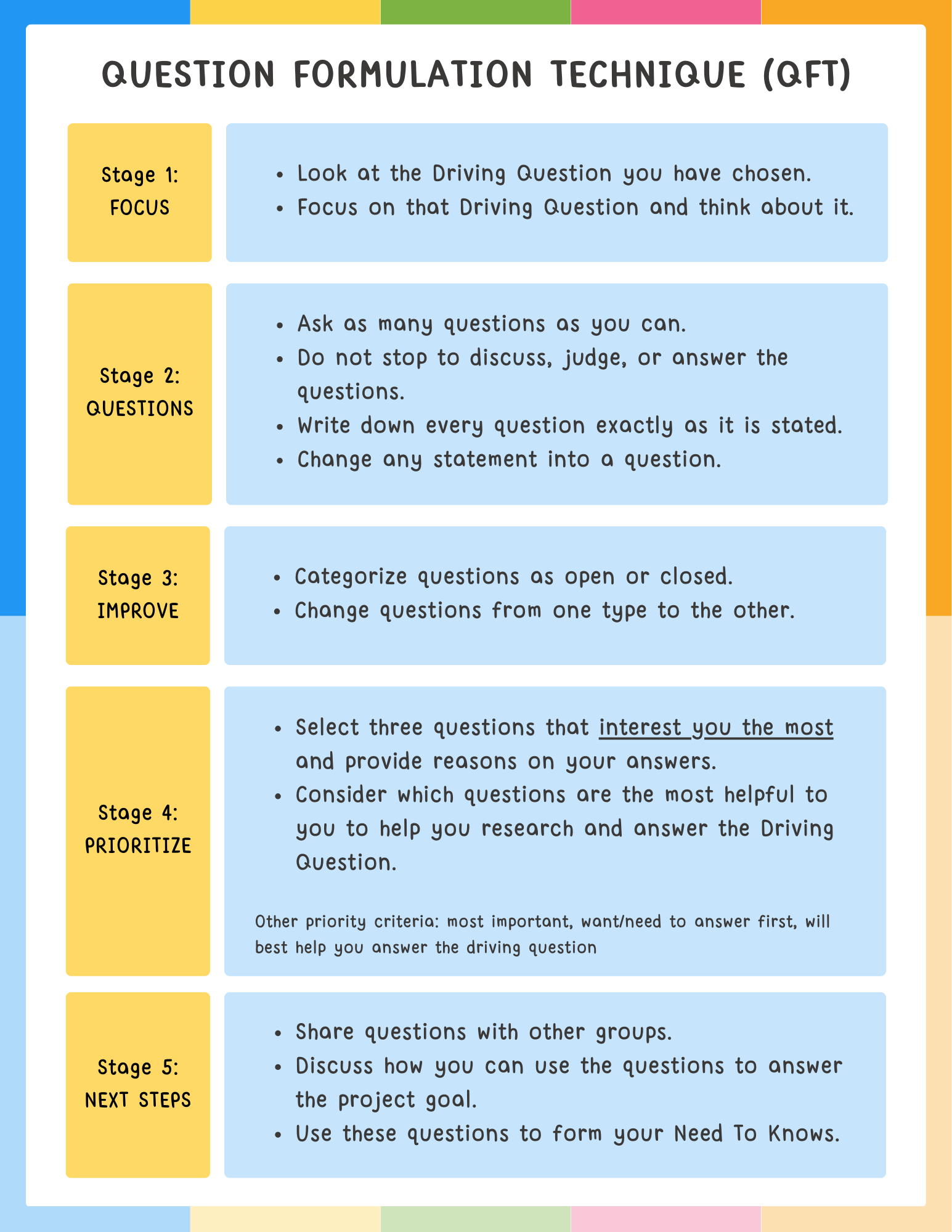
-------------------------------------------------------------------------------------------
Old Project Question
For classes using the old unit project, PBL can be integrated with the following Driving Question:
How can we design a home that would be suitable for Arctic living?